




Most business leaders track traditional metrics such as NPS, Customer Satisfaction (CSAT), and average response time. They are, however, overlooking the single factor that reliably predicts customer return, referrals, increased spending, and the willingness to forgive a mistake: emotion.
This episode focuses on proving the cost of this emotion gap and detailing the actions leaders must take now to achieve lasting success.
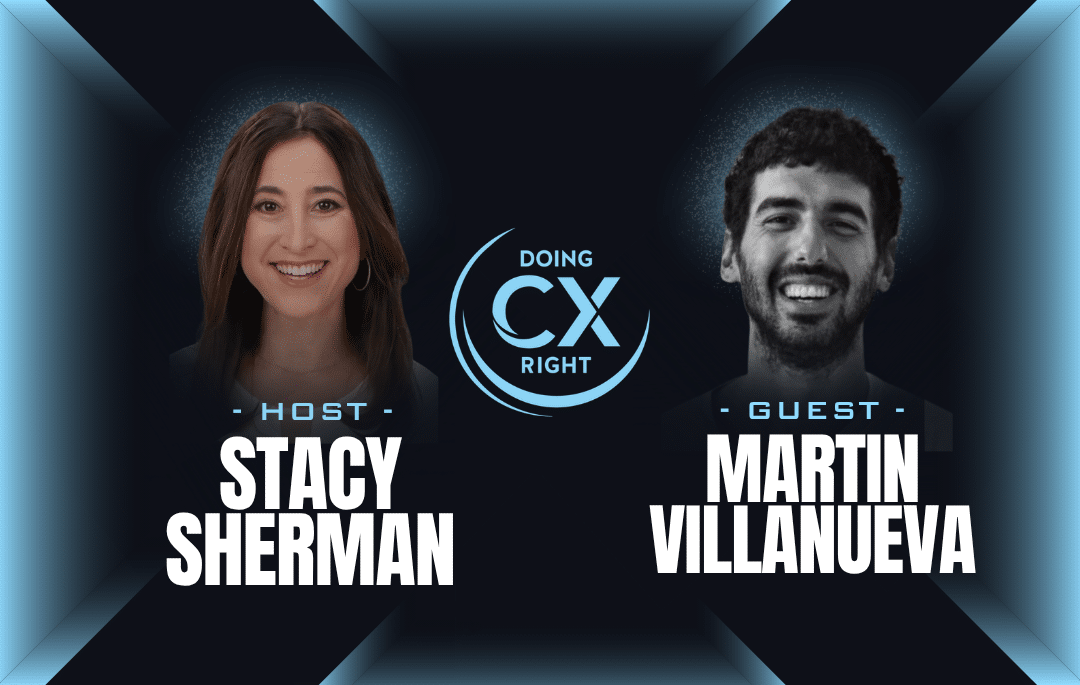
Stacy Sherman speaks to Isabelle Zdatny at Qualtrics XM Institute about in-depth research that reveals what separates companies that earn customer loyalty from those that keep losing it without knowing why.
What You Will Learn About Earning Customer Loyalty:
- How to identify the one emotion your brand must stand for and turn it into a metric your leadership team will act on
- Why customers with high emotion ratings are exponentially more likely to trust, forgive a mistake, and recommend your brand than any functional metric currently predicts
- What a four-year longitudinal study of publicly traded companies reveals about the stock performance gap between emotion leaders and emotion laggards
- Why AI deployed in customer service is eroding trust faster than it is creating efficiency, and what to do instead
- How one company stopped measuring satisfaction entirely, created a proprietary metric tied to executive compensation, and changed how their entire organization operated
- What behavioral signals inside your existing call recordings and chat transcripts are already telling you about how customers feel that post-transaction surveys will never capture
Actionable Customer Experience and Loyalty Takeaways:
- Stop framing loyalty as a cost center when presenting to the C-suite.
- Audit whether your loyalty program and support team share the same customer data.
- Build a customer journey map before designing any loyalty initiative.
- Define the value exchange before you ask customers for their data.
- Replace tier structures with membership status.
- Measure engagement depth, not just transaction activity.
- Rotate which team leads at each stage of the customer journey.
- Use AI to increase message relevance, not message volume.
- Prepare your brand for the agent-to-agent economy now.
- Go through your own customer experience regularly.
Press Play To WATCH On Youtube
Doing CX Right Podcast Topics with Timestamps
[00:01:00] What customer experience means when viewed through a loyalty lens
[00:02:30] Why organizational silos are a customer experience problem, not just an internal one
[00:04:00] How journey mapping closes the gap between departments
[00:05:30] Making the financial case for loyalty investment to the C-suite
[00:08:00] Why loyalty programs have become a cliché and what to do instead
[00:10:30] The metrics that confirm whether a loyalty program is working
[00:11:30] Where emotion belongs in customer experience design
[00:13:30] How AI changes the design of loyalty and personalization programs
[00:14:30] The agent-to-agent economy and what it means for brand trust
[00:18:30] IKEA’s approach: starting every program with brand values
Read Full Episode Transcript
Stacy Sherman: [00:00:00] Hello, Martin. Welcome to the Doing CX Right show.
Martin Villanueva: Thank you. Thank you for having me.
Stacy Sherman: I am thrilled to have you, and it’s also really cool because you’re in Amsterdam and I’m in the United States, and we are so far apart, yet I feel so close to you right now.
Martin Villanueva: Thank you. Me too. We had a really nice conversation before recording, right?
Stacy Sherman: Yeah. Yeah, we did, and so now it’s time to let the audience hear our fabulous thoughts together. But before we do, can you give a little glimpse of who you are? What do you do professionally?
Martin Villanueva: So I’m Martin, originally from Argentina, living in Amsterdam, as you said, and I work for IKEA.
I have a global role. I’m responsible for personalization and loyalty in this IKEA world.
Stacy Sherman: IKEA, I know the brand very well, and a customer of IKEA for many years, and I bet many listeners will say the same. So we’ll dive into what makes people loyal to IKEA and some of the work you do. But before, what is a fun fact [00:01:00] about you that people might not know?
Martin Villanueva: Something that people don’t know. Well, that I work at anything I could in Australia. I even cleaned toilets in a hotel, for example, or I was a Spanish teacher in Australia, or I sold used secondhand cars as well. So like I did so many things which made me go out and experience a lot of stuff.
Stacy Sherman: Wow, cleaning toilets and these other roles.
I guess you were delivering a customer experience without really defining it at that time. Yeah, totally. So when I say doing customer experience right, what does that mean to you from the lens of loyalty and customer retention?
Martin Villanueva: I work for many brands, for many big- Mm-hmm … huge corporations, most brands in the world, Nike, Adidas, McDonald’s, and now IKEA, and what I’ve noticed is that many of them separate CX over here, loyalty over there, service in another team, and personalization somewhere else.
But customers don’t experience companies or brands in silos, right? They experience one brand only. If your loyalty program [00:02:00] says, “We know you. Thank you for sharing this data with us,” but then you go to customer support and it says- Well, can you start over and explain everything again? That’s not loyalty, that’s fragmentation, right?
So the brands that do this right can create an actual experience where every touchpoint reinforces the same feeling, right? So that’s how I will see CX done right. When you feel that the brand gets you, that it helps you, and it makes your life better, that’s what I will say it’s a good CX.
Stacy Sherman: Yes, and I also say that customers do not care about your org chart.
No. But yet silos is everywhere. I’ve worked for over 25 years in corporate and mid-size companies. So when you say that silos is problematic, and I agree, how do you stop that? Can you stop that?
Martin Villanueva: It’s very difficult, and of course, you were talking about org charts and people, and people in corporate that we do this every single day.
And I think it’s one of the biggest challenges around how you can stop those silos to [00:03:00] happen because everybody in any company wants to do their job right, and they have their own objectives, and they want to reach out to those OKRs from the inside, right? But from the outside, it’s not what the customers will see.
They will see silos. I guess what you can do is just to try to align strategies and try to get to the same objective if you can and try to merge it as you can. Nowadays, I work on personalization, for example, and we always say personalization can be everywhere or it can be nowhere because it’s so broad.
Yeah, be aligned to many topics like loyalty, customer support, marketing, you name it. So we are trying to find those alignments within those areas to have a unique experience, seamless experience.
Stacy Sherman: Alignment is a great word. The way I would create alignment across the different departments is through a tool of journey mapping.
Has that been something you’ve done or found valuable?
Martin Villanueva: Absolutely. That’s one of the first things I did in my role at [00:04:00] Ikea. We built a full customer journey within different customers, putting on each moment of interaction with the consumers which opportunity we could apply for loyalty and for personalizations.
When you are scrolling on your phone and your, uh, social media, since that moment to when you actually do a purchase in store and you buy a hotdog when you leave. So we did all these experiments and all this, uh, mapping, and it really, really helped us.
Stacy Sherman: And for listeners, you might be saying, “Well, what does journey mapping have to do with silos?”
Well, the answer is that by bringing every department together into the same room and mapping out walking in the customer’s shoes, how they learn, buy, get, use, pay, get help, every role understands the domino effect and how they affect each other. So I love, Martín, that you said you do that, and it’s so important.
Martin Villanueva: Yeah, totally agree. And one thing that we all need to understand in the industry is that sometimes personalization will lead, [00:05:00] sometimes loyalty will lead, sometimes customer support will lead. So if we get that right, everybody will know their role and their part in each moment of that interaction, and that’s putting the customer in the center, right?
It’s not putting the topic in the center.
Stacy Sherman: So research has shown that companies spend so much more money to acquire a new customer, and they’re focusing on acquiring new, getting new than retaining an existing customer. It’s like they’re not loving the ones they have, in, to quote myself. Yeah. Most budgets are still skewed towards acquisition, and we know that loyalty is important.
Yet a lot of those in roles like you and I have that we have to make the financial case to the C-suite that loyalty programs deserve an investment. So first question is: What’s your advice how to get the C-suite to believe that loyalty matters, that you need to [00:06:00] focus on loyalty programs?
Martin Villanueva: That’s a great question, and it’s part of what I’ve been doing in, in these last 15 years with all these companies.
It, it’s a key question, and it, maybe it’s difficult to apply it. But first of all, I will try to move the conversation away from loyalty as a cost center, you know, as something that will bring costs, and bring it towards loyalty as a growth engine. Because when loyalty is done right, it improves multiple levers at once.
So you can think about frequency, basket size, retention, CLTV, advocacy, first data, quality, you name it. There are several metrics that it can improve. So when I talk with executives and I have these conversations, my first question was why loyalty often gets underfunded, right? And, and it’s not because leaders disagree with it.
I think everyone agrees that loyalty programs are really, really important. But I think sometimes it gets framed as a, a nice-to-have marketing layer, you know, instead of a business model multiplier. It will multiply your business in many ways. So I usually make the case, I use, like, maybe three, four [00:07:00] models or conversation topics to change this around.
The first one is the retention economics. We all know that keeping customers longer generally improves profitability, right? And it’s more efficient to do this than to replace churn with new acquisition. So that’s the first one, and there is no battling against it. I mean, it makes sense, and it’s in lo- in all the books, right?
Second is the behavioral value. Loyal customers don’t just buy more, but they trust you more. They, they forgive you more of the things that the brand, uh, maybe is doing wrong or is not doing correctly. So they engage more. They give you permission to know them better, so that’s amazing as well. So there’s your behavioral value within.
And then the strategic, maybe resilience about it. It’s, acquisition is getting more expensive day by day. We all know that. So attention is fragmented. I can experience myself on social media, right? AI will make comparison even easier. So retentions becomes a defensive, a defensive layer. I think also really, really important to understand.
If you don’t invest in loyalty, you’re choosing to rent your growth instead of owning it, you know? So [00:08:00] Yeah, that’s what I would say.
Stacy Sherman: When we talk about loyalty, I feel like it’s so overused, it’s becoming cliche. Yes. It is. So how can we reframe that? What could we help the audience listeners understand when we say loyalty, even loyalty programs, what are we talking about from your perspective?
Martin Villanueva: I think it’s getting a cliche because all loyalty programs today are reward systems. I truly believe that. When they should be designing loyalty programs as relationship systems, right? So you go from rewards to relationships, and that, I think that’s the biggest cliche ever, and people are not understanding it completely.
They give discounts. They start with maybe a birthday email, maybe a tier structure. Remember when I worked at Nike, we had all these tiers, and we tried to simplify the program. So now it was called Nike+ and now it’s just called Nike Membership because that’s it. Everybody that buys at Nike and it’s a member receives the same benefits.
It’s a relationship status. It’s not that I’m gonna treat you differently, right? And that’s not nice in a [00:09:00] relationship. That’s what I do every single day when I interact with a brand. Like, why should I share my data with you? We are not thinking as customers, because I am a customer, too. How many points do I get per euro?
Like airlines, for example. How many points do I get? That’s an example that we all do, but then mostly we are focused on relationships with customers.
Stacy Sherman: Why should I have a relationship with you? I wanna pause on that. That is such a important point. Now, as customers, we’re not actually saying that to ourselves out loud.
Mm. If neuroscience and psychologists were here, they probably could really lend some insights here that that is really what’s going on in our minds as we think and feel- Hmm … at every interaction.
Martin Villanueva: It’s also a hot topic. In every conference I go or I speak, professionals tend to speak about relationships, right?
Like emotional loyalty. That’s also a, a very hot topic nowadays, but I don’t think everybody’s getting it correctly because a relationship should be both ways. It’s not [00:10:00] just one way, and that’s how I would start answering your question. How do you generate trust with another person, for example? It’s by sharing both of you- Things of yourself, things that you actually care about, and then you start building that trust and start sharing more with the other person.
And I think that’s exactly what is happening or, or what should happen with brands. Like, we should actually get to an instance of trust with a brand. I hope we can get it with Ikea. I think we have a really good brand trust. That’s where it should be, based in trust, and that’s how you build a relationship, and that’s what we are pursuing.
Stacy Sherman: So pursuing, how do you know that your loyalty initiatives are working? What are your favorite metrics to actually know that you’re doing it right?
Martin Villanueva: Many. I will say customer lifetime value could be one of my favorite ones. To go a step below, I should say I like metrics that connect behavior, economics, and the emotional and strength that it builds.
So I care about the classics, of course, repeat purchase rate, frequency, CLTV, as I mentioned, active member rate, churn. But I also want to [00:11:00] know, and I also will also pursue and, uh, try to understand, are members getting more engaged over time, for example? That’s a question I, I make myself. Are we increasing relevance, not just activity?
Because activity is, it’s not a good indicator, right? That we are actually getting more from the customers. That’s another question I do. It’s like, are we earning more permission from customers to personalize? And that’s a signal of trust. That’s what I was talking about before. It’s like, are they actually sharing more data with us?
Are we asking them questions and they are replying? Are we reducing friction in service and experience? So maybe they are soft questions, but I think they are really important.
Stacy Sherman: You mentioned a word before and I wanna dig into emotion. Say more. How is emotion important in business and even in the loyalty initiatives that you’re working on?
Because a lot of companies say emotions don’t matter. They’re very transactional. They’re very profit-driven. So where does emotion come into this?
Martin Villanueva: Of course, emotions are different from person to person or human to [00:12:00] human. They are different than a brand to human or human to brand. I think we all expect when we have a level of trust with a brand is to get some value from it, and that value will bring me some emotions.
If a brand knows me or I, I share with a brand data for the brand to know me and understand me, what I’m expecting is some value for me which will bring me better choices, better life, better commitment to the brand. So I kind of relate emotion to value.
Stacy Sherman: When you’ve done a journey mapping with your teams, where does emotion come into that exercise?
Martin Villanueva: Not specifically. We, we don’t put emotion in the, in every single touchpoint because that will feel creepy. You know what I mean? If we think about getting emotional connections in every single touchpoint of the journey, it will start feeling like too much. It’s like when you ask chatGPT for answers and it says Oh, that’s amazing, Martin.
You– Good job. And at some point, you start feeling like, well, stop talking like that. You know? Like, stop telling me, like, being so soft and gentle with me. It’s not [00:13:00] true. It’s not how I want to experience this. Try just to be human, human-centric, and then understanding the consumers from another perspective, which, yeah, that brings emotions.
That brings good vibes and good intentions. And so that’s the spirit, you know, when you talk about emotion.
Stacy Sherman: My two cents is, and I agree with what you’re saying, when you are designing the experiences at these micro moments, you do have to ask yourself as a team, are we creating a positive or negative experience, that emotional connection to the brand?
So it may not be specifically happy, overjoyed. You know, like, it, it can get a bit over the top. But as a rule, it has to be positive at every micro moment. So let me ask you this: AI. How does AI affect these loyalty programs and designing these initiatives? Is AI a factor? Is it helpful or not?
Martin Villanueva: Absolutely, and mostly for personalization.
Personalization will [00:14:00] be the base of a- any loyalty program in the near future. Maybe next year should be the average for e- every big brand. And then you can’t personalize without AI, I think. But it’s not about just making it more efficient. It’s not about sending more personalized messages to more people.
It’s about making it more relevant and more human, and that’s what we are aiming for at IKEA. We want to use AI in a way that it can be relevant to you and bring value to you, the consumer, in a human way. Because you can automate more generic messages faster, but it will be irrelevant, right? Last year, I focused in this keynote I, I did.
The title was, “Can You Actually Fall in Love with a Brand?” How AI is changing the intimacy within brands and consumers. I touch upon the base of building trust. At some point, agents will speak to agents, right? So your agent, Stacy, will talk to any brand’s agent, and it will try to understand it, and it will try to buy things from it.
So where does loyalty stands in that specific moment of loyalty, like agents talking to agents? So I think that trust will be the major [00:15:00] topic next year or even this one. How you can actually, as a human, say, “Hey, agent, you can trust IKEA. You can trust Nike. You can trust Adidas. This is a brand I trust.
This is a brand that goes with my ideas, my values, so go just interact with it.” And I think that’s gonna be more difficult for brands coming in to play, rather than the ones that have already a reputation and have already trust built with consumers.
Stacy Sherman: Yeah, and the reason this is so important, which is another whole conversation another day, is that AI is recommending brands.
We’re becoming in a zero-click economy, and therefore what people say about your brand and those sentiments out in the public matter so much more than they ever did before. For someone listening who wants to start a loyalty program in their company, what’s your advice to them? What are two, three things they should go do right now?
Martin Villanueva: Try not to think about rewards. Try not to think about promotions, discounts. Try to think about generating a connection with the [00:16:00] consumer. Focus on that. Focus on trying to understand that customer. So I think if you scale it, you can actually think about generating value to the consumers, and that’s what I would start.
How do I generate the value to us, the consumers? That’s what I will start with
Stacy Sherman: At IKEA, you know what works. Without giving any trade secrets away, is there something that IKEA’s really known for in team on some of the things you’re actually doing? Can you shed any light on that?
Martin Villanueva: I think I said some stuff already, but IKEA is well known by generating the transparency and building trust with its consumers and everybody that enters to the store.
So I think we try to follow these values in every single thing we do. You name it, personalization, loyalty, customer support, and being human. That’s also a very big value from IKEA, and that’s w- how we are well known, for being human. And that’s our biggest metric.
Stacy Sherman: So to get tactical, you’re starting with values- Yeah
and then making sure that everybody at every touchpoint is acting upon that shared [00:17:00] value. Is that what you’re saying?
Martin Villanueva: Exactly like that. Values are- Okay … the starting point at IKEA.
Stacy Sherman: Okay. So give us one more. You’ve got your values. Now you’re creating a program. You’re creating personalization. What’s something people can literally go do in terms of optimizing that loyalty program?
Martin Villanueva: I think you start with the values, and you try to actually continue with the brand proposition and be an extension of the brand. From the values, you start building value to the customer. Why would I be sharing data with you? Why would I be sharing data with IKEA? Why would I share, as a customer, data with you if it’s not bringing me any value or it’s not bringing me anything to this relationship?
I’m just sharing with you. What are you sharing with me? That, I will say that’s, uh, really, really important, and we really consider that.
Stacy Sherman: So are you saying when you design any program, you are making sure that there’s a value exchange- Yeah … with that customer so that they want to give you their information?
So you’re designing a program, that exchange is [00:18:00] easy, simple, and that they want to.
Martin Villanueva: 100%, and that’s what I meant when I said a two-ways relationship.
Stacy Sherman: All right, final questions. What is the most important takeaway you want people to remember from this conversation?
Martin Villanueva: Build trust, build a program that it’s built to last, and always, always keep the customer in the center, and always put yourself as a customer.
That’s what I do every single day.
Stacy Sherman: Go be your customer. Get on the calls with your customer service team. Exactly. Oh, there’s so much to say on that. So
Martin Villanueva: much to say, and, and, you know, at every IKEA office in the world, they are based in a store. So actually, every single day, we have to go through the store and see people interact and customers interact with our products in real time.
Stacy Sherman: That’s well said, and I… Everybody listening can go do that. Go be your own customer and go observe. Love that. And leadership, best leadership advice you’ve ever received or given.
Martin Villanueva: Try to move the needle when it will generate value. [00:19:00] Don’t try to shake status quo just for doing it. When I was younger, I wanted to change everything in my area.
We should now put AI into working and changing everything radically, and the main questions came, and they were, like, very simple. Why would we do that if this is actually giving real good value? We should focus on things that will move the needle in the right direction, and not just doing it because it’s a trend.
Stacy Sherman: I have to comment on that, because in my corporate life, there’d be so many reorganizations, and I felt like it, they were just changing for change. It wasn’t purposeful, and it was disruptive, and it was happening every six months. And so I love that point, and I hope that leaders listening to this understand that, that change just to change, it, it’s gotta be valuable, and learn from every change.
Just don’t change just to say you did it.
Martin Villanueva: Exactly. Exactly. Not everything needs to be changed every single time.
Stacy Sherman: Yeah. And my favorite question of the entire show, if you could go back in time to your younger 20-year-old self, based [00:20:00] on what you know now that you didn’t know then, Martin, what would you say to the younger you?
Martin Villanueva: I will tell me, my first thing is go do it. If the opportunity is out there, go do it and pursue it. Try everything you can try. Always healthy, stay healthy, but try everything, everything that, that you see as an opportunity, because you will learn from it, and you will get it right in the end. So that’s what I will say.
Go for it. If you have to clean floors just to surf in the afternoon, go for it. If you need to sell cars just to buy a ticket to go and study in, uh, Hong Kong like I did, go for it. And then if you need to move across the world like I did with all my family from Argentina to Amsterdam to pursue another opportunity, do it.
Life is too short, and I think it’s worth it to try.
Stacy Sherman: To try, and I would say don’t even try, just do. Do it. Don’t try. Try is thinking. Try is pondering and hoping. You did it.
Martin Villanueva: Yes, exactly. Just do it.
Stacy Sherman: Just do it. Nike says that very well. Well, before we go, I [00:21:00] wanted you to tell one short story that I got the same thing from my mom growing up.
Please, share your story about Mom.
Martin Villanueva: So our conversation started off the record. Stacy asked me about my birth date, and I said, “Well, tomorrow is my 40 birthday,” which is quite a coincidence. But then she was doubting about her age, and she was, like, counting the years, et cetera, and I was like, “Well, my mom never said her own age.
She always said she was 24.” And until we were 12, 14 years old, she was, like, still saying, “I’m turning 24.” And we still believed her at some point, but then we realized it didn’t. But then herely- Yeah … you have the same case.
Stacy Sherman: So my mom every year would say, “I’m 21.” Then the next year, “I’m 21,” and then, “21.” And then eventually I got smart and I said, “Mom, you can’t be 21 every year.”
And she said, “Oh, you’re right, I’m 21 plus this year.” 21 plus. And so that’s been the running joke. And so I love that our moms from all different parts of the [00:22:00] world have a great philosophy about age and youth.
Martin Villanueva: Go moms. Go moms.
Stacy Sherman: Well, thank you so much for being on this show, and I really appreciate you and your insights, and I’ll share all about you and ways to connect with you in the show notes.
So thank you again.
Martin Villanueva: Thank you, Stacy. It’s been a pleasure. Thank you so much.
Customer Experience Questions & Answers To Boost Business Results
Why do most customer loyalty programs fail to retain customers?
Most loyalty programs are built as reward systems: points, tiers, and discounts. Those mechanics give customers a reason to calculate whether the program offers enough value to stay, rather than a reason to build a relationship with the brand. When a customer who has shared data with a loyalty program contacts support and is asked to re-explain their account history, the program has failed its basic purpose. The loyalty and support teams are operating on separate data, and the customer receives no benefit from the data they share. A program that does not return a specific, relevant value to the customer for the data they provide does not produce repeat purchasing behavior.
How do you make the financial case for loyalty investment when the C-suite views it as a cost?
Present loyalty as a growth engine using three arguments. First, retention economics: keeping an existing customer in an active purchasing relationship costs less than replacing a lost customer through new acquisition. Second, behavioral value: customers who return regularly buy more often, forgive brand errors more readily, and give the brand permission to collect more data over time, each of which has a direct effect on revenue per customer. Third, strategic resilience: acquisition costs are rising and AI is making product comparison faster, which means a business that does not invest in retention is paying acquisition costs repeatedly for the same revenue base.
What is a value exchange in a loyalty program, and why does it matter?
A value exchange is the explicit agreement between a brand and a customer about what the customer receives in return for sharing their data. Before any loyalty or personalization program asks customers for information, the program must define what specific value the customer receives in return. If that answer is not specific and immediate, customers will not share their data. Without that data, the personalization program cannot function, and the loyalty program has no basis for treating customers as individuals rather than transactions.
How does AI affect customer loyalty programs?
AI enables personalization at scale, but it does not automatically build loyalty. The risk is that brands use AI to send more automated messages to more customers faster, which increases volume without increasing relevance. A customer who receives frequent irrelevant messages does not build a relationship with the brand. The standard for AI use in a loyalty or personalization program is whether each message is more relevant to that specific customer, not whether it was delivered more efficiently. Additionally, as AI agents begin transacting on behalf of customers, the brands that have already established a relationship with those customers will be the ones those agents are authorized to engage. Brands that have not built that relationship will not be included.
How do you measure whether a loyalty program is working beyond transaction counts?
Track repeat purchase rate, purchase frequency, active member rate, and customer lifetime value as baseline metrics. Then add three behavioral questions: Are customers sharing more data with the brand over time in response to questions the brand asks? Are customers returning more frequently because the experience is relevant, not just because a promotion is running? Is the friction a customer encounters during a service interaction decreasing over successive contacts? Those three behavioral signals indicate that the customer has concluded the brand is worth continued engagement, which is the actual definition of loyalty as a business outcome.
About Martin Villanueva:
Martin is a customer-focused growth leader with 18 years of experience driving loyalty, personalization, and data-driven engagement for global brands including McDonald’s, Nike, Adidas, and IKEA. He launched Nike+ in Latin America, built Adidas’ Europe-wide membership proposition, and currently leads IKEA’s global customer engagement strategy. His approach combines creativity, analytics, and technology to deepen the connection between brands and their customers through a test-and-learn operating method. A former university football captain and Australian Premier League player who still plays on weekends, Martin brings the same resilience and collaborative energy from the pitch to cross-functional leadership. His career across six continents, from Buenos Aires to Sydney to Amsterdam to New York, gives him a 360-degree view of both consumer behavior and talent development. Beyond his work at IKEA, Martin co-founded the European Loyalty Association Awards, where he serves as its “Chief ELAbrator.” He speaks regularly at industry conferences on customer engagement, AI-powered personalization, and loyalty program design. Connect with Martin on LinkedIn.
About Stacy Sherman:
An award-winning international Certified Speaking Professional (CSP) who has delivered more than 100 standing ovation keynotes and workshops and co-authored best-selling books on Experience Management for sustainable success. She developed a proprietary framework that enables leaders and teams to enhance revenue and brand reputation. Her proven methodology is based on her MBA degree and 25 years of leadership in sales, marketing, employee, and customer experience across diverse industries, including Verizon, AT&T, Schindler Elevator Corporation, Wilton Brands, Martha Stewart Crafts, and LiveOps, generating $2.4 billion in savings and hundreds of millions in revenue. Stacy Sherman has earned widespread recognition for her award-winning “Doing CX Right” podcast, ranked in the top 2% globally with over 200 episodes, and for her courses on LinkedIn Learning, which have garnered hundreds of 5-star reviews. A multi-year Global CX Guru awardee and 2026 ICMI Hall of Fame inductee, Stacy’s insights have been featured in Forbes, Psychology Today, Yahoo News, and other leading publications.