
American Airlines Free Wi-Fi: Customer Experience Lessons You Can Apply

American Airlines Free Wi-Fi: Customer Experience Lessons You Can Apply

American Airlines just announced free, high-speed inflight Wi-Fi for AAdvantage members, sponsored by my past employer, AT&T. The rollout starts this month (January 2026) and is expected to reach most of the fleet by early spring.

That is great news.

But the headline isn’t really about bandwidth. It’s about correcting a massive imbalance in how companies treat their revenue source:

Most companies keep chasing the next customer… while the ones funding the business get a “thanks for your order” and nothing else.

The Loyalty Imbalance

I’ve seen this across companies for a very long time:

  • New clients get the highest discounts.
  • New sign-ups get the best terms.
  • Loyal customers get the mediocre, standard rate.

American Airlines is flipping that script.

They are stepping up in a landscape where the bar is rising fast. United Airlines has already started offering free Wi-Fi on Starlink-equipped aircraft, and Delta Air Lines has been doing free Wi-Fi for loyalty members, too. (You can read more about these airline offers and policies in article by Zach Wichter in USA TODAY.

So, is American too late?

No.

This isn’t a race to provide the best internet speed. It’s a strategic choice to fix a broken definition of “connection.”

Connectivity vs. Connection

In business, there are two types of connection. There is digital connectivity (the utility, the bandwidth, the internet). And there is emotional connection (the relationship, the feeling, the loyalty).

The problem is that you cannot build a strong emotional connection while holding the digital connectivity hostage.

Think about the signal a paywall sends: You are a loyal flier. You sit down in your seat, ready to work, but the airline blocks you. They ask for a credit card. This creates a negative interaction. It adds friction. It creates distance. It tells the customer: “We can connect you to the internet, but only if you pay a toll.”

Now, look at the shift American is making. By removing the paywall, they are removing the friction. You sit down, and the internet is just… there. This creates a positive interaction. It removes the distance. It tells the customer: “We want you connected—to your work, to your family, and to us.”

They decided that the relationship was worth more than the transaction fee.

They are choosing to Love the ones they have℠. That is Doing CX Right℠. By removing the barrier, they proved they are willing to invest in the people who invest in them.

That is how you become irreplaceable. You stack enough of these positive interactions together until the sum is so high that the customer wouldn’t dream of going anywhere else.

Now the business lesson, even if you’re not in airlines: A perk isn’t the point. The signal is what matters. And the signal means: “We recognize you. Your loyalty changes how we treat you.”

How to Find Your “Wi-Fi”

My recommendation: Examine what you are doing to appreciate your existing customers who trust you. This requires knowing your customer at a deep level. You need to identify the friction they have learned to live with and make it disappear.

In your industry, your “Wi-Fi” isn’t about bandwidth. It is about removing the “tax” you charge for loyalty.

  • In Retail: Maybe it’s the return policy. Stop asking your regulars for a receipt. You know them. You know they bought it.
  • In E-commerce: Maybe it’s the shipping speed. Stop holding back the “fast lane” for a surcharge. Give them the upgrade because they’ve earned it.
  • In B2B: Maybe it’s the clock. Stop running the meter on a five-minute phone call. Treat the advice as an investment, not an invoice.

Whatever it is, identify the barrier that makes your best customers feel like strangers. Then, remove it.

Give them the Wi-Fi equivalent in your business.

Go find your Wi-Fi.

Want more proven strategies to boost revenue and retention, let’s talk. 
Still Measuring Customer Satisfaction? That Might Be the Problem

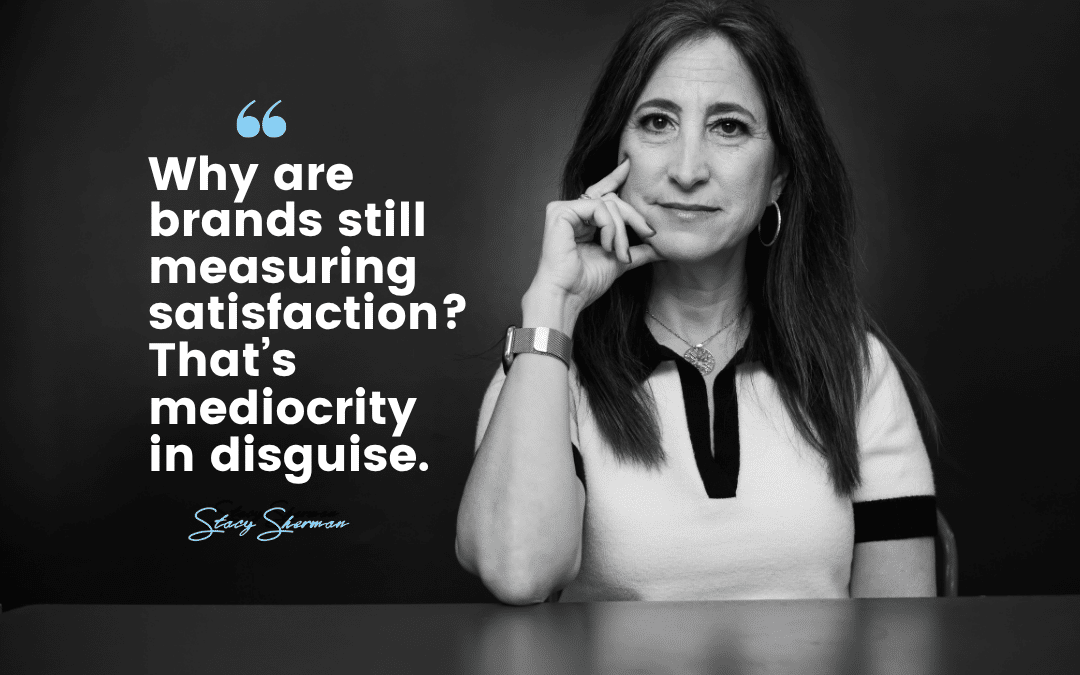
Still Measuring Customer Satisfaction? That Might Be the Problem

Imagine: You go out to dinner. The table’s clean. The food arrives on time. The service is polite. Nothing goes wrong.

Later, someone asks, “How was it?” You pause. “It was fine.” That one word—fine—reveals everything. You probably wouldn’t return because ‘fine‘ is the everyday version of ‘satisfied, and that’s mediocre. That’s “average,” and people need and want more than that.  

What Customer Satisfaction Signals (And Why It’s Not Enough)

The Rolling Stones’ “I Can’t Get No Satisfaction” still plays nearly 60 years later—for a reason. It captured something true: the gap between what people expect—and what they get. That same tension is also evident in customer experience (CX).

Satisfaction is often treated as a win. A green metric. A notification that everything is going well. But in reality, it means that nothing went wrong.

And that’s the problem.

It doesn’t indicate the experience was meaningful. It doesn’t mean the customer will come back. It definitely doesn’t mean they’ll recommend you. When my kids were younger—and even now as adults—if I asked how their day was and they said, “It was fine,” I never needed to ask more. I already knew: it wasn’t terrible, but it wasn’t fabulous either.

That’s how satisfaction works. It captures the absence of pain, but not the presence of value. And companies won’t succeed in the long term without it.

The Restaurant “Customer Satisfaction” Test:

Would you put “satisfactory” on a sign outside your restaurant? Would you launch a campaign that says, “Come for a meal that won’t disappoint”? Would you report to your board, “Our customers describe us as fine”?

Of course not.

And yet, that’s exactly how many companies treat customer satisfaction scores. They chase and report them. Attach incentives to them too, and then wonder why customer retention is problematic. In reality, Satisfied customers leave all the time. Because satisfaction is neutral. It’s not negative, but it’s not enough to build loyalty.

What Actually Predicts Customer Retention and Loyalty

After 25 years of working in companies across various industries and listening to customers, here’s what I’ve learned: People come back because something made a lasting impression, not just because the basics were met. Something felt personal, thoughtful, and exceeded expectations.

They remember:

  • When someone anticipated their need
  • When a problem was resolved before they noticed
  • When an interaction felt human—not transactional

They use words like “impressed,” “surprised,” or “they really got me.” They tell stories about the experience—not just the outcome.

And no one ever says, “I was satisfied.”

If you’ve been using the customer satisfaction (C-Sat) metric, that’s okay. It served a purpose. For years, it gave teams a way to start paying attention to experience—and that mattered.

But we’re living in a new era. Customers now require more, and have increasingly more ways to get what they need. AI has made comparing options faster. Switching is easier. And the best experience someone had last week now sets the bar for how they evaluate you.

In that reality, “nothing went wrong” isn’t a reliable signal of loyalty. It’s just a low bar. One that doesn’t reflect how people actually make choices.

If satisfaction is still your Customer eXperience measurement, you’re not alone. But it might be time to ask: What is it really telling you? And what is it missing?

“(I Can’t Get No) Satisfaction” is a fantastic song. It’ll outlive all of us. It’s earned its place.

But the metric?

That’s the one I want you to really consider. Maybe—it’s time to retire it.

Want to know better measurements and ways to design customer experiences the right way to boost retention, revenue, and referrals? Let’s talk.

And, subscribe to my newsletter for ongoing actionable strategies delivered to your inbox.


Listen to Doing CX Right Podcast

Subscribe on your favorite channels.

8 Customer Experience Lessons That Will Transform Your Business

8 Customer Experience Lessons That Will Transform Your Business

2025 is in the rearview mirror, but its lessons are your compass for 2026. Disengaged employees, siloed teams, and fleeting customer satisfaction held many businesses back last year, but they also revealed clear opportunities for growth.

In this special Doing CX Right episode, Stacy Sherman revisits standout moments and key takeaways from last year’s top guests. Discover what worked and what didn’t and how to implement strategies that inspire employees, foster collaboration, and strengthen customer relationships.

Packed with actionable advice and practical insights, this recap will help you create a winning CX strategy to boost revenue and brand reputation.

Listen To Top Doing Customer Experience Right Lessons On Your Favorite Podcast Channel

Doing CX Right podcast show on Spotify with host Stacy Sherman
DoingCXRight-Podcast-on-Amazon-with-host-Stacy-Sherman.
Doing Customer Experience (CX) Right Podcast - Hosted by Stacy Sherman
Doing CX Right podcast show on iHeart Radio with host Stacy Sherman

Customer Experience Lesson 1:


Building Connections Is More Important Than Making Corrections

Too often, businesses focus on fixing issues while neglecting to build meaningful connections. When customers feel like case numbers instead of people, trust erodes, and loyalty disappears.

As Seth Godin says, “Empathy is where we begin.” But empathy isn’t just about being kind—it’s about understanding your customers on a deeper level. Daniel Goleman identifies three types of empathy we must master (learn more on Doing CX Right℠‬ podcast ep.155)

  • Cognitive Empathy: Understanding how others think.
  • Emotional Empathy: Feeling what others feel.
  • Empathic Concern: Anticipating and addressing what others need.

How to Make Empathy Your Superpower:

  • Start every customer interaction by listening first.
  • Focus on nurturing existing customers, not just acquiring new ones.
  • Audit your touchpoints to identify opportunities to build stronger emotional connections.
  • Deliver consistent delight, turning customers into advocates.

Consistency builds trust, and trust strengthens loyalty.

Customer Experience Lesson 2:
People Power Business

Technology and strategy are essential, but without the right people, they’re meaningless. As David Meerman Scott said, “Doing CX right is about bringing humanity to business.” Similarly, Brian Adams added, “People are the only competitive advantage left in business.”

However, disengaged employees can derail even the best CX plans. Andy Molinsky’s insight is crucial here: “Connections are built on similarities, not by avoiding differences.”

How to Empower Employees for Better CX:

  • Integrate employee experience (EX) and customer experience (CX); they are inseparable.
  • Equip front-line employees with the tools and autonomy they need to solve problems decisively.
  • Recognize and reward employees publicly to build trust and momentum.
  • Foster decision-making freedom by initiatives like a “no-approval-needed” budget for customer resolutions.

Engaged and empowered employees deliver exceptional CX.

Customer Experience Lesson 3:
Satisfaction Isn’t Enough to Keep Loyal Customers

Satisfaction alone doesn’t build loyalty. Customers need to feel seen, heard, and valued.

Alex Genov summed it up perfectly: “Customers aren’t numbers. Treat them like numbers, and they’ll leave.” Mauro Porcini echoed this sentiment: “Start from the perspective of people, not consumers.”

How to Go Beyond Satisfaction:

  • Map emotional high points in your customer journey and create moments of delight.
  • Turn friction points into opportunities for connection and surprise.
  • End every interaction with the question: “What else should we know to help you better?”

When companies embrace these practices, they not only retain customers but also earn their loyalty. 


Want to know the remaining transformational customer experience lessons? Contact me 

Supersizing Customer Value or Illusions? Insights on McDonald’s $5 Bundled Meal

Supersizing Customer Value or Illusions? Insights on McDonald’s $5 Bundled Meal

McDonald’s recent promotional move, resulting in an 8% jump in foot traffic on day one, has the industry buzzing. This highlights the undeniable power of an enticing offer. However, before diving headfirst into replicating this strategy, it’s crucial to critically examine the broader implications of value and opportunities it presents.

Customer Value vs. Worth: The Real Happy Meal

Offering a $5 meal deal caters to price-sensitive customers, but value encompasses more than just a low price. True value involves delivering an exceptional overall experience, maintaining high quality, and ensuring that products and services meet the evolving needs of customers. Instead of merely focusing on price cuts, consider what value truly means from the customer’s perspective. Is it possible to create a “Happy Meal” of experiences that satisfies deeper desires?

Rethinking Bundling: More Than a Combo Meal

Bundling has become a successful strategy, offering customers more for less. However, it’s worth exploring new approaches. Imagine offering highly customizable bundles instead of standardized combos. Allowing customers to select components that suit their preferences can lead to greater satisfaction and a stronger connection to the brand. This move could transform the traditional combo meal into a tailored dining experience.

Inclusive Digital Promotions: No Customer Left Behind

McDonald’s clever use of app promotions highlights the power of digital engagement. However, it is crucial to ensure these promotions are accessible to all customers, regardless of their tech proficiency. Developing user-friendly, inclusive digital platforms can enhance the customer experience for everyone, ensuring no customer is left behind in the digital age.

Harmonizing Corporate and Franchise Goals: The Perfect Recipe For Customer Value

Some franchisees have expressed concerns about the financial pressure from promotions. Creating strategies that benefit both corporate and franchise operations is like perfecting a recipe—it requires balance and the right ingredients. When all stakeholders, from executives to front-line employees, are aligned and motivated, the organization becomes more cohesive and successful.

Building Long-Term Loyalty: From Drive-Thru to Loyalty Lane

While low-cost deals attract immediate attention, building long-term customer loyalty requires more than just temporary offers. Focus on creating experiences that keep customers returning even after the deal ends. Personalized services, quality interactions, and consistent value delivery are key to fostering lasting relationships. It’s about transforming a quick drive-thru visit into a journey down loyalty lane.

Innovative Customer Experience Approaches: The Ultimate Combo

To lead in customer experience innovation, consider these strategies that balance cost and customer value:

Customizable Bundles: Allow customers to create their own bundles, choosing products or services that fit their preferences within a set price range. This personalization can delight customers while maintaining affordability.

Tiered Pricing Models: Offer different pricing tiers that provide various levels of value and experience. This approach caters to both price-sensitive customers and those willing to pay more for enhanced experiences.

Reward Programs: Implement loyalty programs that reward repeat customers with discounts, exclusive offers, or special experiences. This encourages long-term engagement beyond initial low-cost deals.

Experience Enhancements: Focus on enhancing the overall customer experience through superior service, quality products, and memorable interactions. These elements add value that goes beyond the price point.

Community Engagement: Develop promotions that encourage community participation and create a sense of belonging. Group discounts or community events can foster loyalty and positive word-of-mouth.

Social Responsibility: Align pricing and promotional strategies with social and environmental goals. Customers increasingly value brands that demonstrate a commitment to ethical practices.

Challenging the Status Quo: Flipping the Script

True innovation involves challenging existing paradigms and rethinking the foundations of value, pricing, and customer experience. Use the momentum from successful promotions to drive transformational changes within the industry. Consider what traditional practices can be reimagined or discarded to create something better. Embrace the opportunity to redefine customer value in ways never done before.

The Path Forward: Leading the Way

In the realm of customer experience, the true leaders are those who dare to reimagine the playing field entirely. By looking beyond conventional strategies and embracing bold, innovative ideas, businesses can create lasting impacts beyond temporary promotions.

Improving Customer Service and Retention – The DARMA™ Method

Improving Customer Service and Retention – The DARMA™ Method

Doing CX Right podcast show on Spotify with host Stacy Sherman
DoingCXRight-Podcast-on-Amazon-with-host-Stacy-Sherman.
Doing Customer Experience (CX) Right Podcast - Hosted by Stacy Sherman
Doing CX Right podcast show on iHeart Radio with host Stacy Sherman

Ever feel like you’re losing customers as fast as you gain them?

Wondering how to stop this ‘leaky bucket’ scenario and increase customer retention?

Welcome to another episode of “Doing CX Right,” where we directly address the all-too-familiar problem of customer churn.

The Impact of the DARMA™ Method on Customer Retention

I’m thrilled to have Dave Seaton, a passionate advocate for customer experience and the brain behind the DARMA™ Method for customer journey mapping. This method is a game-changer for retaining the customers you’ve worked so hard to acquire. Dave will share how deeply understanding your customers’ needs, aspirations, and resonances can transform your approach to customer retention.

Unpacking the Journey Mapping Process

Dave’s distinctive approach to journey mapping goes beyond merely tracking customer interactions—it’s about reinforcing crucial customer loyalty. We’ll uncover how this method not only tracks but enhances customer relationships through strategic engagement and detailed understanding.

Addressing CX Misconceptions and Strategic Implementation

Our conversation will also tackle common CX misconceptions and explore strategic ways to ensure that your customer experience initiatives deliver tangible business outcomes. The focus is on shifting from merely reacting to customer issues to a proactive strategy that fosters loyalty and promotes sustained customer retention.

Five Key Lessons to Enhance Customer Retention Through Journey Mapping

1. Define the CX Problem: Understand the problem you’re trying to solve by identifying the target customer and the business case for the journey mapping initiative.
2. Engage in Thorough Research: Conduct extensive customer interviews to gather quality insights and understand their needs, goals, and values along their journey.
3. Map Out the Customer Journey: Analyze research data, create personas, and visually represent the customer’s story to highlight critical moments and improvement opportunities.
4.  Act on Insights: Use the insights gained through journey mapping to drive meaningful changes within the company. The map should act as a catalyst for improvement.
5. Implement Effective Change Management: Ensure stakeholder buy-in and maintain engagement throughout the journey mapping process, facilitating cross-functional collaboration for a cohesive customer service approach.

Conclusion

This episode is not just an exploration of the transformative power of journey mapping but a comprehensive toolkit for amplifying customer retention. Join us as we dive into these essential strategies to help you shore up that leaky bucket and transform customer journey mapping into a retention powerhouse.

Press Play  To WATCH On Youtube

About Dave Seaton:  

CEO AND PRINCIPAL CONSULTANT

Incredible experiences don’t happen by accident—they’re intentionally designed. When you understand the customer journey, you can prioritize the experiences that matter most. Dave’s proudest of a project where he flew 4,768 miles, got lost in rural Pennsylvania, and survived a high-speed Uber ride down Bourbon Street to interview customers for a B2B SaaS company. Using those insights, he transformed the customer experience and reduced churn by 66%. Connect on LinkedIn

    About Stacy Sherman: Founder of Doing CX Right℠‬

    Customer experience and marketing global keynote speaker, journalist, co-author of two books, advisor, and host of the award-winning DoingCXRight podcast. Known for her Heart & Science℠ framework that helps you gain profitable clients and brand loyalty–fueled by an empowered workforce. Stacy’s been walking the talk for 25 years as a strategist and practitioner at companies of all sizes and industries, i.e., Liveops, Verizon, Schindler Elevator Corp, Wilton Brands, and AT&T. She’s also a board advisor at multiple universities, featured in Forbes and other top-rated publications.

    Her Why: To cultivate loyal relationships and meaningful experiences that enrich people’s lives. Contact Stacy for DOING Customer Experience (CX) and Service Right, not just TALKING about it. Continue reading bio >here.

    Learn More About Increasing Customer Loyalty.

    Watch Stacy Sherman’s Linkedin Learning Course‬.

    Customer service expert Stacy Sherman shows you how to foster a strong frontline worker experience so your agents and other staff can deliver value and engender customer loyalty.

    Learn how to identify challenges that impact frontline worker effectiveness.

    Explore hiring strategies for contact center and other frontline roles, as well as how to build positive relationships with your frontline workers from day one.

    Find out how to elevate frontline worker performance through intentional training and development and prepare frontline workers for future leadership.

    This course equips you with a blueprint to connect frontline worker experience to customer experience, so that you’re focused on doing right by your teams and your customers.

    Topics Discussed: Doing CX Right podcast

    customer experience, Seton CX, customer journey maps, dharma method, musician, multi-instrumentalist, producer, composer, software company, online game, mentor, customer service, accounting, advertising, customer experience, customer feedback, journey mapping, business outcomes, stakeholder engagement, customer churn, customer retention, customer lifetime value, loyalty, retention, B2B, B2C, B2B2C, employee journeys, patient journeys